In 2019, most of us use the Internet in our homes and on-the-go every single day, but how many of us know how this platform we depend on to communicate, inform and entertain was created? With more than 4 billion people now connected to the Internet around the world, it is easy forget that it started as a technological experiment only 50 years ago!
Cold War/Hot Technology
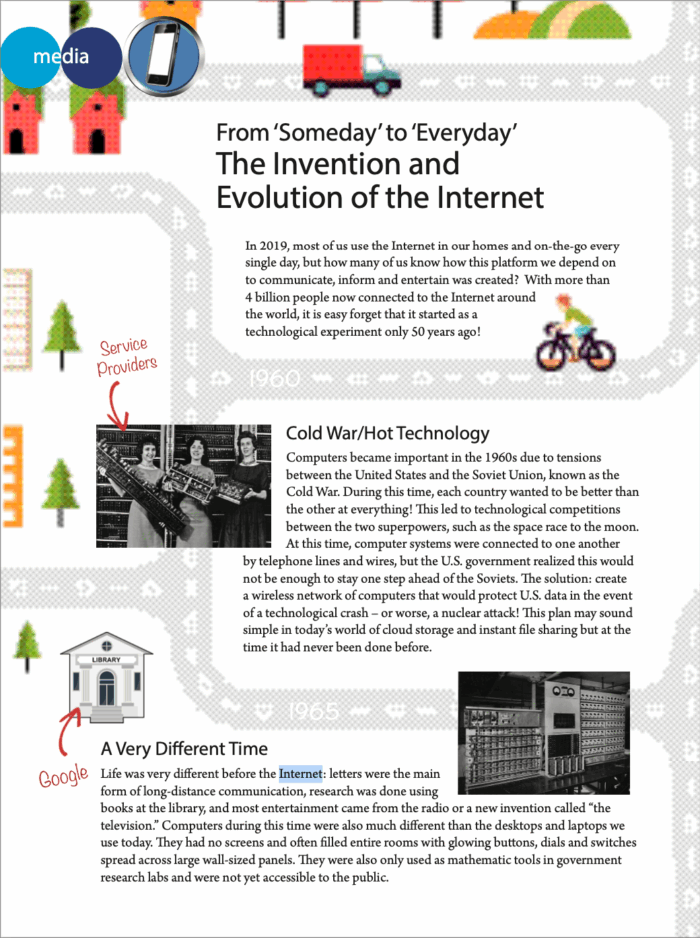
Computers became important in the 1960s due to tensions between the United States and the Soviet Union, known as the Cold War. During this time, each country wanted to be better than the other at everything! This led to technological competitions between the two superpowers, such as the space race to the moon. At this time, computer systems were connected to one another by telephone lines and wires, but the U.S. government realized this would not be enough to stay one step ahead of the Soviets. The solution: create a wireless network of computers that would protect U.S. data in the event of a technological crash – or worse, a nuclear attack! This plan may sound simple in today’s world of cloud storage and instant file sharing but at the time it had never been done before.
.
A Very Different Time
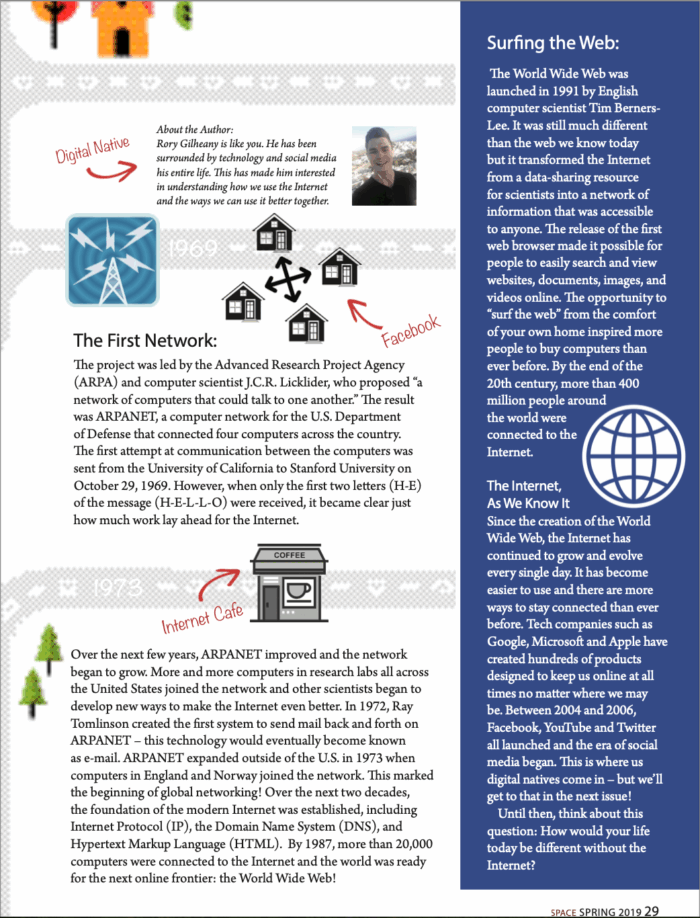
Life was very different before the Internet: letters were the main form of long-distance communication, research was done using books at the library, and most entertainment came from the radio or a new invention called “the television.” Computers during this time were also much different than the desktops and laptops we use today. They had no screens and often filled entire rooms with glowing buttons, dials and switches spread across large wall-sized panels. They were also only used as mathematic tools in government research labs and were not yet accessible to the public.
.
The First Network:
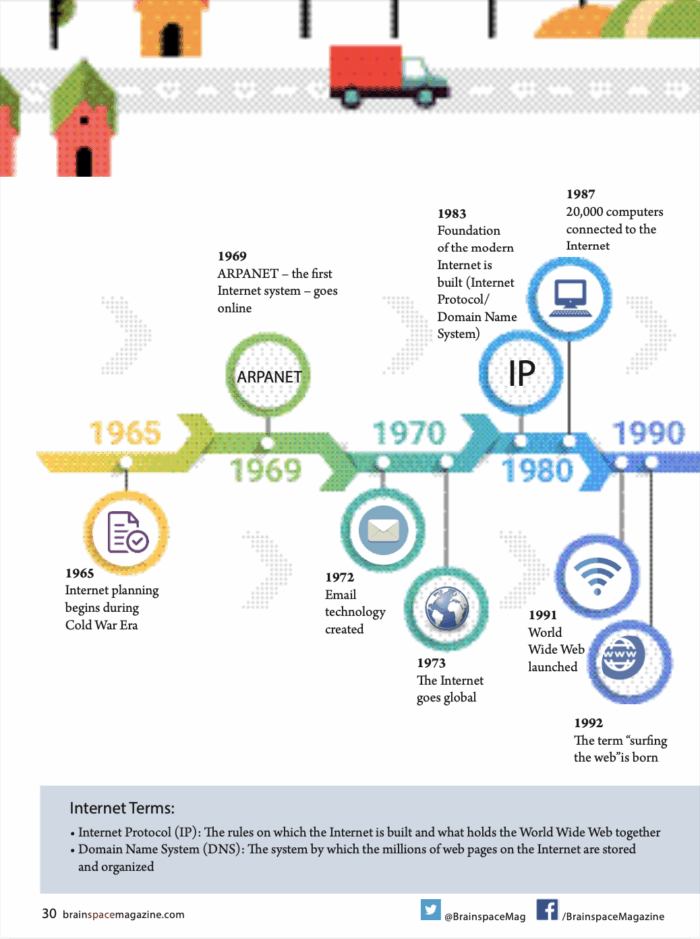
The project was led by the Advanced Research Project Agency (ARPA) and computer scientist J.C.R. Licklider, who proposed “a network of computers that could talk to one another.” The result was ARPANET, a computer network for the U.S. Department of Defense that connected four computers across the country. The first attempt at communication between the computers was sent from the University of California to Stanford University on October 29, 1969. However, when only the first two letters (H-E) of the message (H-E-L-L-O) were received, it became clear just how much work lay ahead for the Internet. Over the next few years, ARPANET improved and the network began to grow. More and more computers in research labs all across the United States joined the network and other scientists began to develop new ways to make the Internet even better. In 1972, Ray Tomlinson created the first system to send mail back and forth on ARPANET – this technology would eventually become known as e-mail. ARPANET expanded outside of the U.S. in 1973 when computers in England and Norway joined the network. This marked the beginning of global networking! Over the next two decades, the foundation of the modern Internet was established, including Internet Protocol (IP), the Domain Name System (DNS), and Hypertext Markup Language (HTML). By 1987, more than 20,000 computers were connected to the Internet and the world was ready for the next online frontier: the World Wide Web!
Surfing the Web:
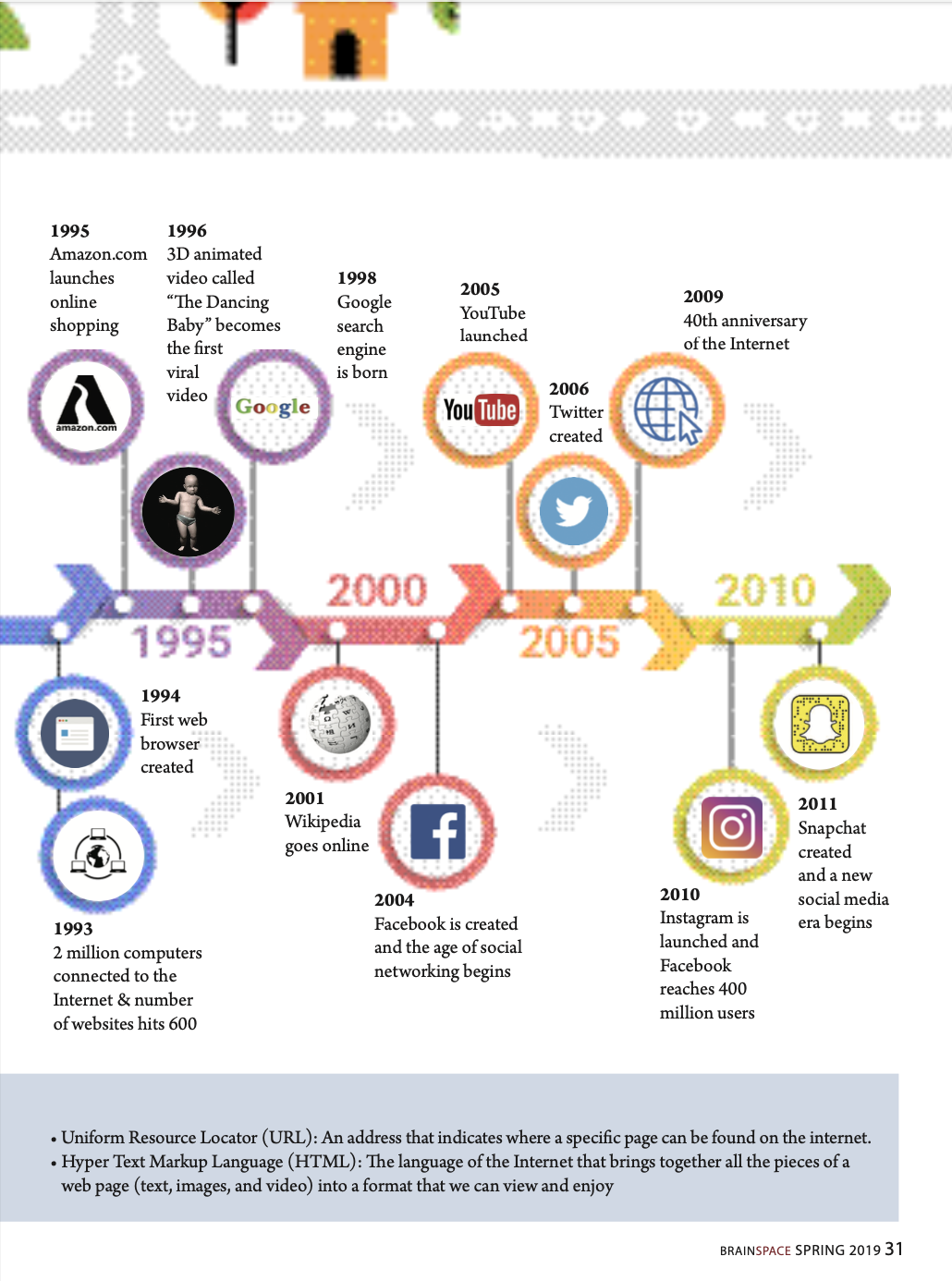
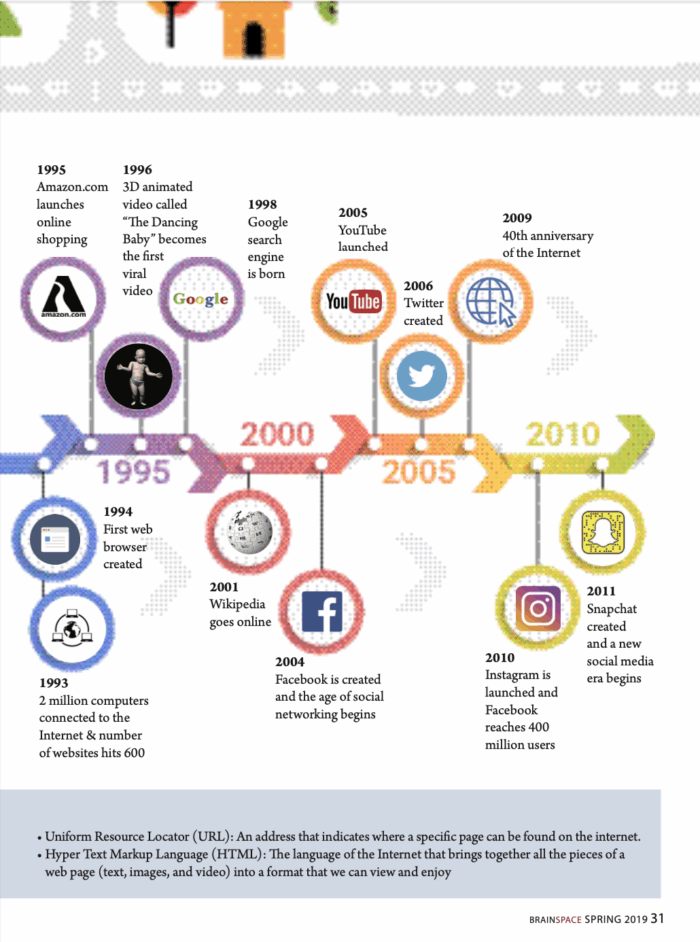
The World Wide Web was launched in 1991 by English computer scientist Tim Berners-Lee. It was still much different than the web we know today but it transformed the Internet from a data-sharing resource for scientists into a network of information that was accessible to anyone. The release of the first web browser made it possible for people to easily search and view websites, documents, images, and videos online. The opportunity to “surf the web” from the comfort of your own home inspired more people to buy computers than ever before. By the end of the 20th century, more than 400 million people around the world were connected to the Internet. The Internet, as we know it since the creation of the World Wide Web, the Internet has continued to grow and evolve every single day. It has become easier to use and there are more ways to stay connected than ever before. Tech companies such as Google, Microsoft and Apple have created hundreds of products designed to keep us online at all times no matter where we may be. Between 2004 and 2006, Facebook, YouTube and Twitter all launched and the era of social media began. This is where us digital natives come in – but we’ll get to that in the next issue! Until then, think about this question: How would your life today be different without the Internet?